
Horse Racing
2 hours ago
Hall: Why we should keep Victoria Derby at 2500m
By Lachie Moir
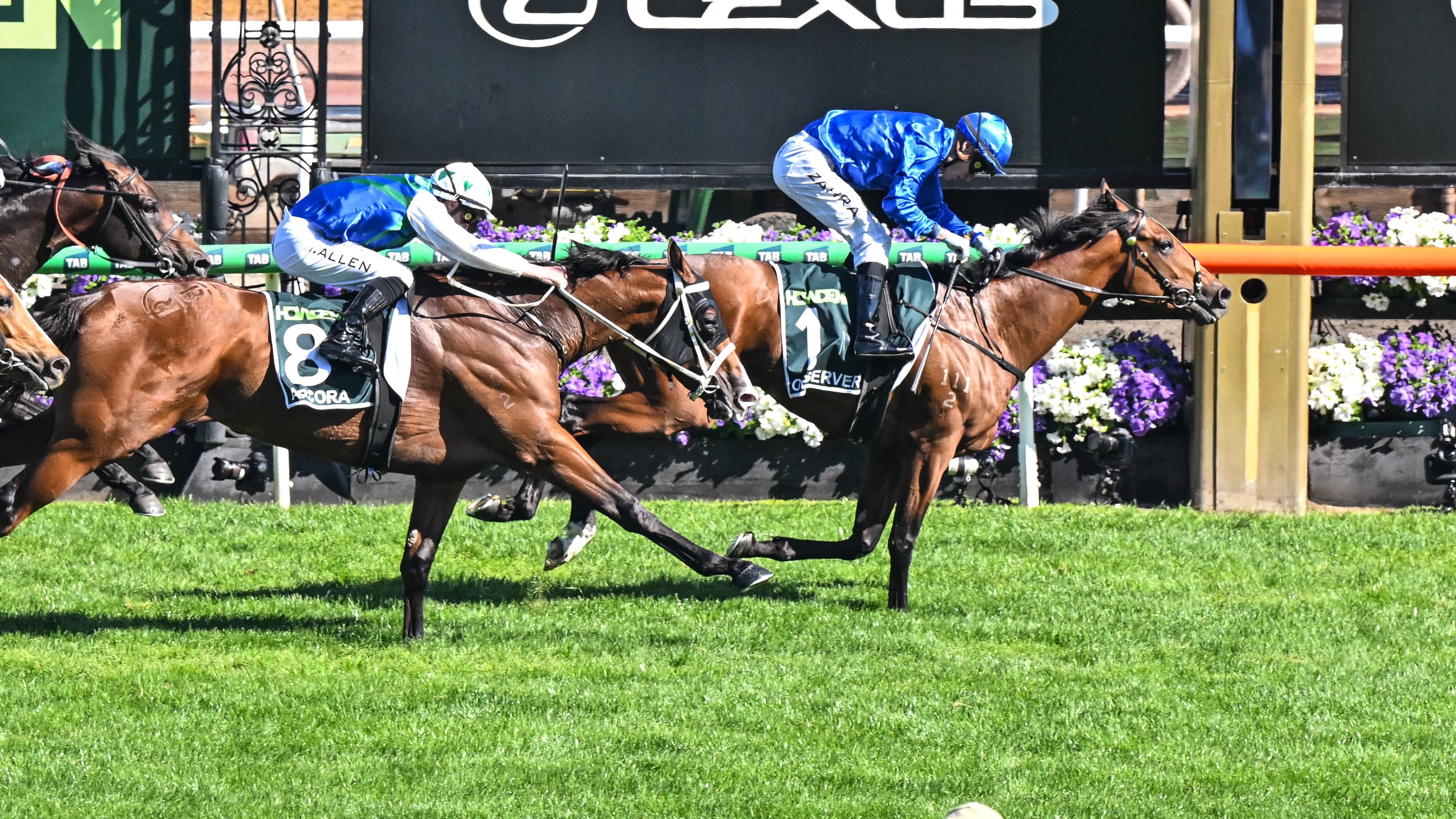
The annual debate surrounding the distance of the Victoria Derby has resurfaced, with Gareth Hall taking a firm stance that the iconic Group 1 should remain at its traditional 2500-metre journey.
Speaking on The Monday Means Test with Wayne Hawkes and John O’Neill on SENTrack and RSN’s Giddy Up, Hall pushed back against suggestions the Derby should be shortened to 2000 metres, arguing that the staying test is what separates the race from other major three-year-old contests.
“This argument gets brought up every year around this time,” Hall said.
“It’s 2500m. If you want to race over 2000m, go to Sydney the week before.”
Hall’s comments echo those of trainer Gai Waterhouse, who recently voiced her support for the Derby retaining its 2500-metre distance via social media.
Waterhouse argued the race should remain a genuine test of staying ability, rather than being judged on how a horse performs over shorter distances later in it's career.
“A Derby winner does not need to prove itself twice,” Waterhouse wrote.
“The Victoria Derby is a target race. It asks a particular question at a particular moment in a horse’s development: which of this generation’s three-year-olds can run 2500 metres best on Derby Day?”
Waterhouse also questioned the logic of judging a Derby winner on its subsequent performances over shorter distances.
“It makes little sense subsequently to downgrade that performance because the horse fails to reproduce it over 1400, 1600 or 2000 metres,” she said.
“We don’t mark down the best mathematics student because he subsequently performs less well in English.”
The trainer also pointed to the existing spring Champion Stakes as evidence that Australian racing already has a major three-year-old contest over 2000 metres.
“We already have a Spring Champion Stakes. Why would we want another one?” she asked.
“A three-year-old capable of running 2500 metres at Flemington in early November is demonstrating an unusual combination of precocity, stamina, soundness and class,” she said.
The discussion comes amid growing concerns about the strength and competitiveness of the Victoria Derby in recent years, with Hawkes suggesting the race had been “lacking” and that connections had effectively been put on notice.
Hall, however, argued that the answer should not be changing the fundamental nature of the race.
“Well, just increase the prize money,” Hall responded.
For Hall, shortening the Derby would risk taking away one of the key challenges that makes the race unique on the Australian racing calendar.
“We need to challenge the trainers,” he said.
“Racing is becoming boring if we just make it another 2000m Group 1 race.
“It’s the Derby, it’s the oldest race we’ve got.”
Hawkes, however, questioned whether shortening the race would actually have a major impact on the spectacle itself.
“Does it really change the spectacle if it’s 2000m compared to 2500m?” Hawkes asked.
His argument centres around the potential to broaden the pool of horses capable of contesting the race.
Hawkes believes a 2000-metre Derby could attract horses with a miler profile who possess enough stamina to stretch to the distance, potentially opening the race up to a wider range of three-year-olds.
Under the current 2500-metre conditions, he suggested, some of those horses may simply be ruled out before connections ever consider targeting the race.
The debate highlights the broader question facing Australian racing: should the Victoria Derby evolve to attract a larger and potentially stronger field, or should it's traditional staying character be protected?
For Hall and Waterhouse, there appears to be little doubt.
The 2500-metre journey is not a problem to be solved, it is precisely what makes the Victoria Derby, the Victoria Derby.

Horse Racing
1 hour ago
Horse Racing
2 hours ago
Horse Racing
4 hours ago

Horse Racing
1 day ago
Horse Racing
1 day ago

Horse Racing
1 day ago

Horse Racing
1 day ago